
VARIA
The vast majority of the works presented here were created within the calligraphy school program led by Anu Purre.
These include both traditional compositions and calligraphy with a contemporary approach, with modern developments presented alongside historical scripts.
Works have been grouped according to historical styles and arranged in chronological order.
Roman scripts
Roman Capitals
I century
Roman capitals according to Christopher Haanes + Italic script
Broad-edged nibs, Chinese ink, acrylic ink, cotton paper


Rustic capitals
I century
Broad-edged nib, alternative writing tool – plastic strip, Chinese ink

Square capitals
IV century
Broad-edged and pointed nibs, Chinese ink, acrylic ink, watercolours


After Roman Script
Uncial Script
IV century
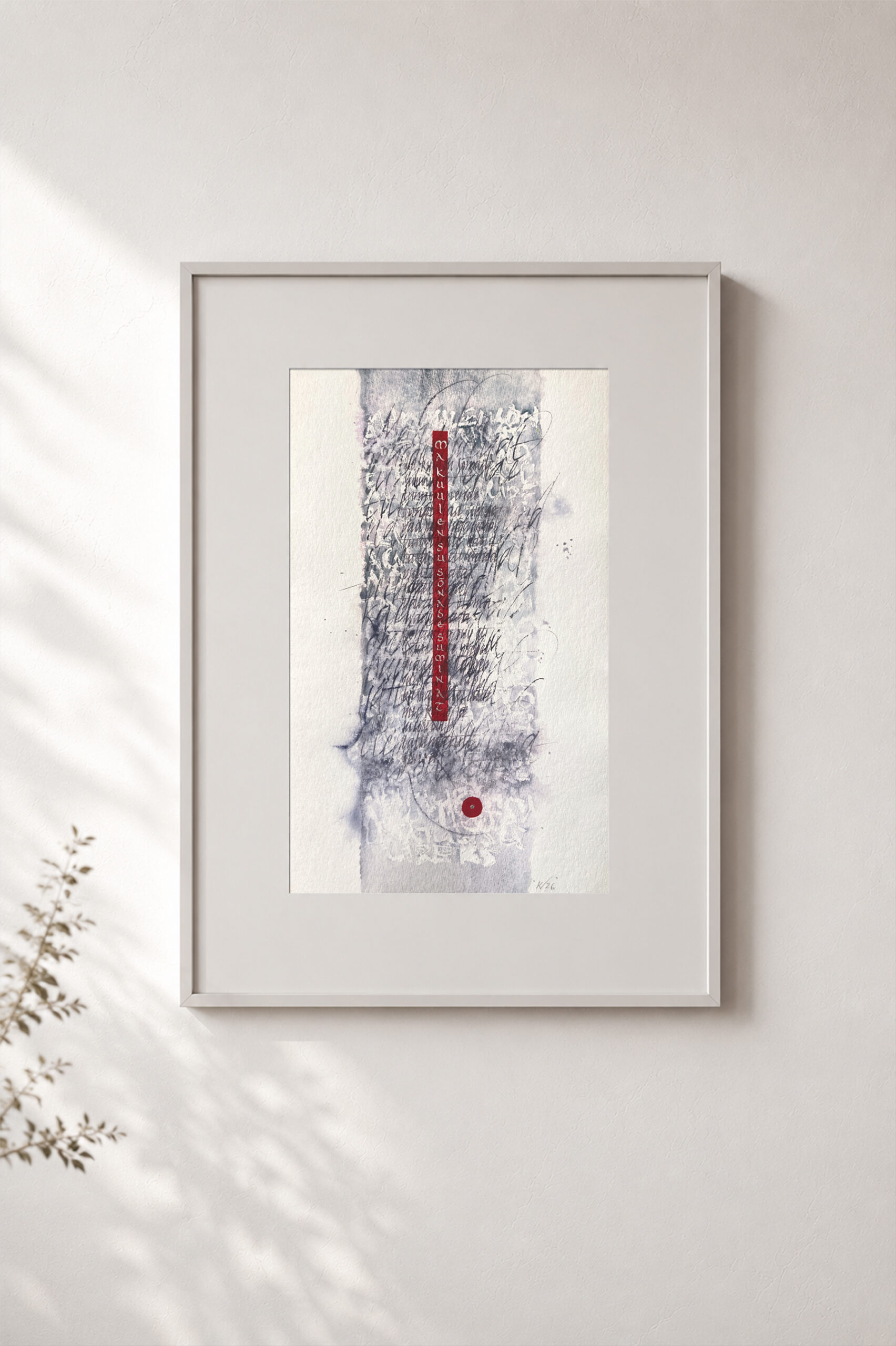
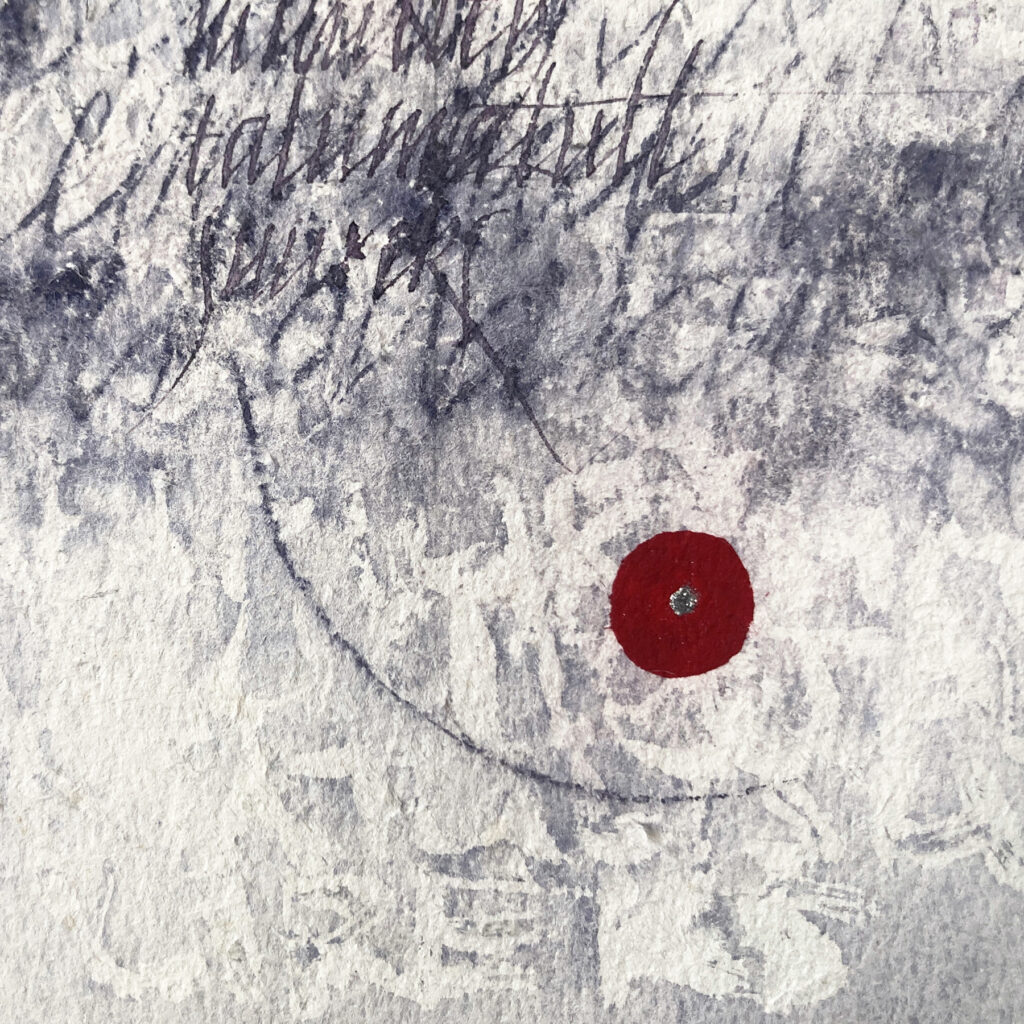
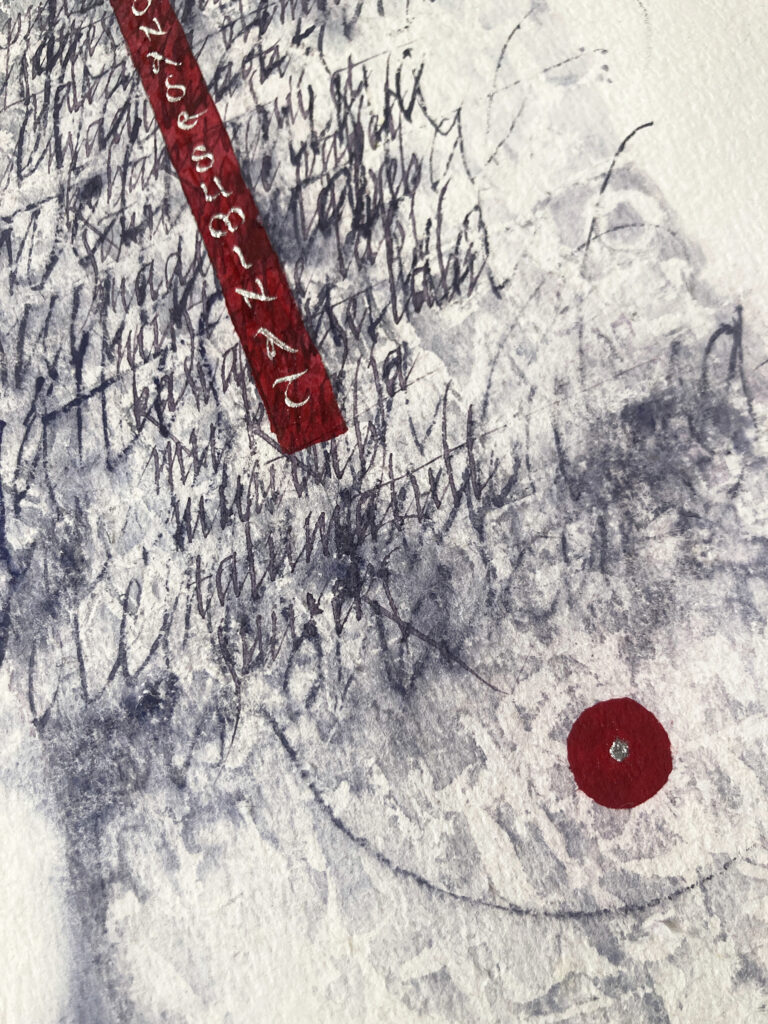
Murmur
The words are layered on top of each other, different scripts like different dialects. Sometimes You can recognize only a word or too, sometimes a thought becomes very clear. Inspired by and interpreted from the poetry of Kärt Hellerma. The lower layers of the work use freehand and sharp Italic lettering, while the silver lettering on top is Uncial.
210 × 345 mm; brushes, dip pen with pointed nib, watercolours, acrylic inks



Half Uncial - Insular script
VII century
Broad-edged nibs, watercolours, coffee


Gothic scripts
Fraktur
XV century
Broad-edged nibs, Chinese ink, acrylic ink

Bâtarde
XVII century
Broad-edged nib, brush, Chinese ink, watercolour

Renaissance scriptS
Italic
XIV / XV century
Broad-edged nib, acrylic ink


‘Sharp’ Italic (a modern take on historical script)
Pointed nib, Chinese ink, watercolour, cotton paper


Flockers / Hermit
Broad-edged and pointed nibs


Joined and stretched Italic development
Pointed nib, metallic watercolour, pastel paper


Baroque script
Copperplate
XVII century
Pointed nib, acrylic ink, watercolours, cotton paper

Composition with sketchy landscapes
Pointed nib, Chinese ink, acrylic inks

Contemporary scripts
Code script
The author of the Code Script is Vivian Majevski.
Broad-edged and pointed nibs, Chinese ink

Lapidary Antiqua
Inspired by Andreas Schenk’s alphabet, used together with Visigothic script
Pointed nib, acrylic ink, metal leaf, Fabriano paper


Vjaz
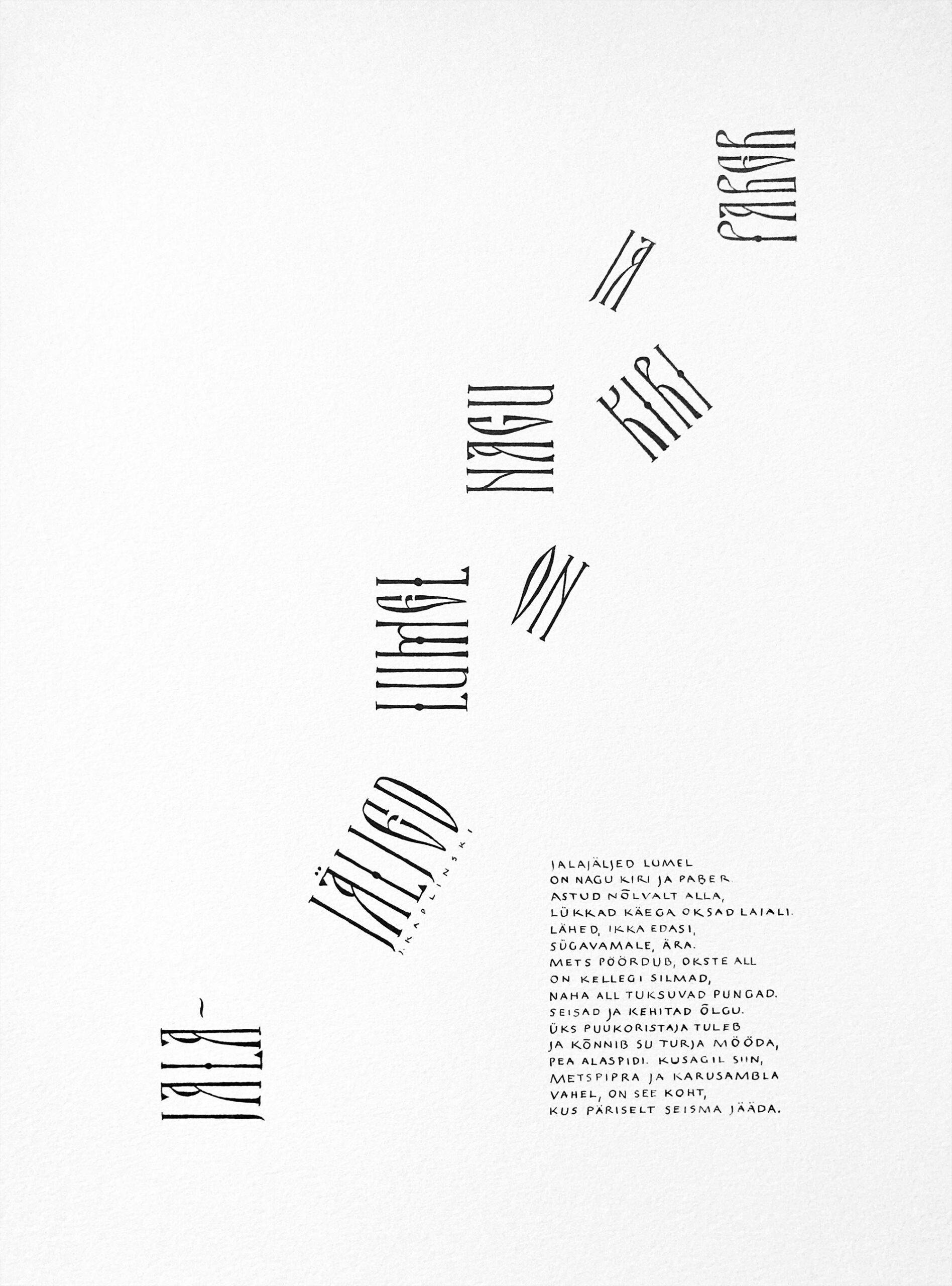
Footprints on the Snow. Minimalistic composition with Latin letters inspired by Vjaz
Broad-edged and pointed nibs, Chinese ink
Contemporary script according to Francesca Biasetton
Pointed nib, Chinese ink, acrylic ink

A Japanese-themed experiment
Chopsticks, broad brush, Chinese ink, watercolours


